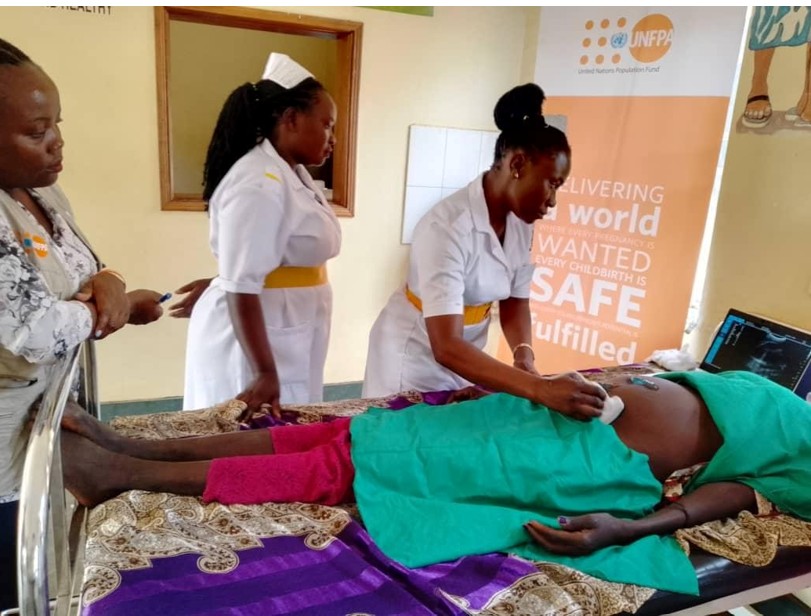
Medstat Initiative continues to strengthen frontline healthcare capacity across Uganda, focusing on practical, technology-enabled care that improves service delivery in underserved communities. To date, 26 midwives in refugee settlements have been trained in Point-of-Care Ultrasound (POCUS), equipping them with essential diagnostic skills to improve maternal and neonatal outcomes in resource-limited settings.
This training is transforming maternal care in environments where access to imaging and specialists is limited. With POCUS, midwives can quickly assess high-risk pregnancies, confirm fetal position, identify complications such as multiple gestations or placenta previa, and make timely referrals. This improves clinical decision-making and helps reduce delays that can endanger mothers and newborns.
The program has been especially impactful in refugee settlements, where healthcare systems face heavy patient loads, limited equipment, and staffing shortages. Midwives often serve as the first and sometimes only point of care, making their strengthened diagnostic skills critical to improving service quality.
Beyond technical training, the program emphasized integrating ultrasound into routine antenatal care. Participants were supported to build confidence in image acquisition, interpretation, and clinical use, with ongoing mentorship to ensure skills are applied consistently in practice.
Early feedback shows improved detection of complications, faster referrals, and increased patient trust. Women also report greater reassurance during antenatal visits when ultrasound is used to explain fetal health and pregnancy progress.
Looking ahead, Medstat Initiative plans to expand this training to more refugee settlements and rural districts, with continued mentorship and digital learning support to strengthen sustainability and scale impact across Uganda.